


Micro- and Nanoplastics in the Human Body
Health Risks and Prevention
Plastic has become indispensable in our modern world – we live in a plastic age. From packaging and textiles to medical devices, it shapes our everyday lives – durable, lightweight, and versatile. At the same time, global plastic consumption has triggered an ecological and medical development whose extent we are only beginning to understand. Since the 1950s, more than eight billion tons of various plastics have been produced, and a large portion of it remains in the environment and the world’s oceans. Projections by the Ellen MacArthur Foundation indicate that – if this trend continues – by 2050 we will have more plastic than fish in the oceans.
In the environment, plastic, as an artificial polymer material, does not biodegrade but slowly breaks down into ever smaller fragments: micro- and nanoplastics – a process that can take 50 to 500 years. These tiny particles enter the human body via air, water, and food, where they can have far-reaching biological effects, as has only recently become known.
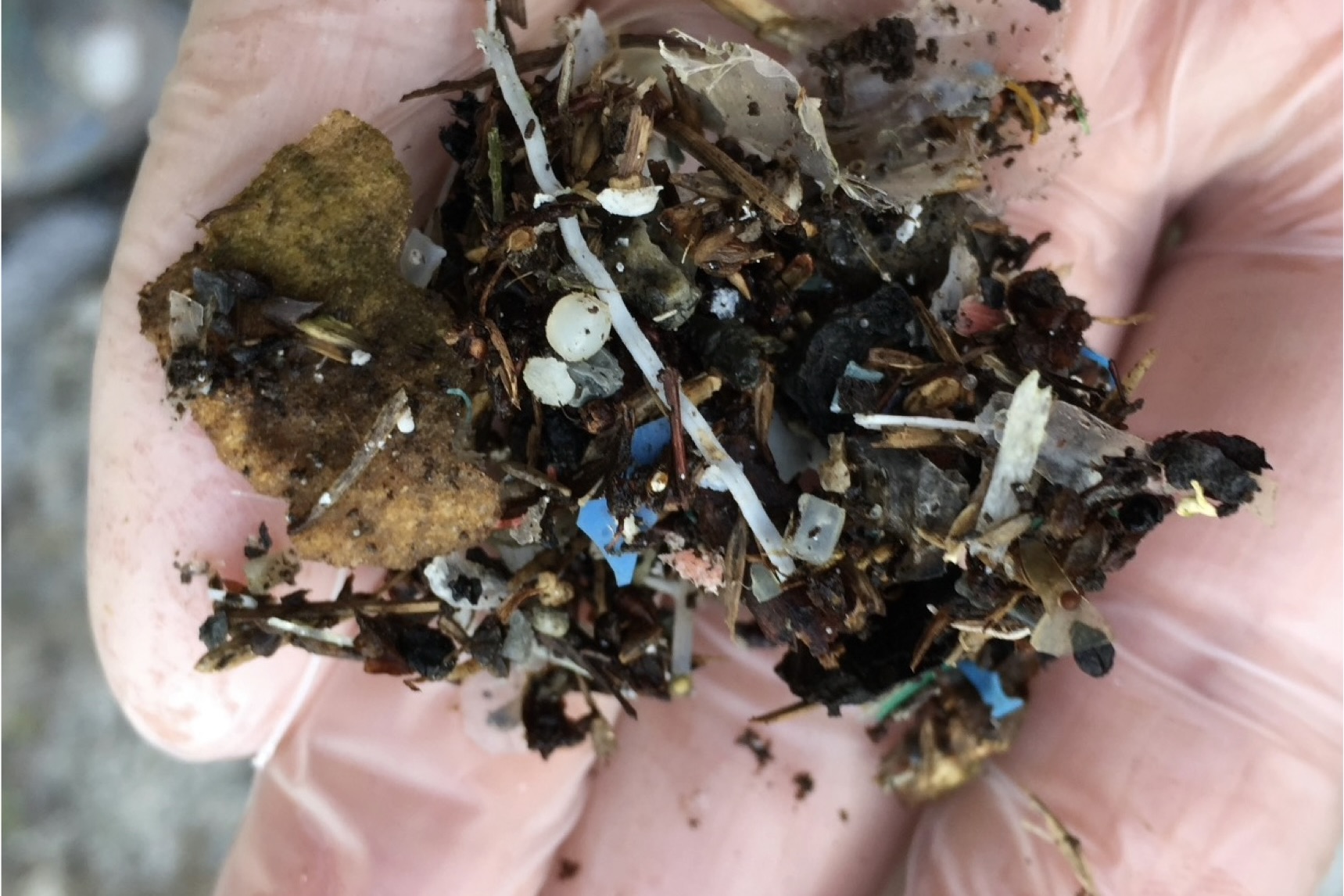
Formation of micro- and nanoplastics
Plastic breaks down due to mechanical stress, UV radiation, temperature fluctuations, and microbial influence. While microplastics comprise particles ranging from 1 µm to 5 mm, nanoplastics are in the submicroscopic range (and can therefore get everywhere, are not filtered out, and more easily overcome biological barriers). Increasing fragmentation leads to the accumulation of plastic particles everywhere – in soils, rivers, wastewater treatment plants, the atmosphere (air and precipitation), and ultimately in the food chain.
Major sources of microplastic particles include packaging, tire abrasion (30-90% depending on the region), synthetic textiles, abrasion from washing machines or wind turbines, cosmetic products, and the general decomposition of plastic waste in the environment. Industrial processes and agriculture also contribute significantly to their release. Because nanoplastics are still much less researched due to methodological limitations, experts assume that we are underestimating rather than overestimating the actual burden.
How do these particles get into the human body?
The routes of ingestion are diverse. The most significant route is oral ingestion via food and drinking water (and everything made from them). Seafood, salt, and beverages made from PET and other materials are particularly problematic. Glass bottles are the focus of attention, but tap water also contains measurable amounts. Ultimately, micro- and nanoplastics were detected in all beverages in varying concentrations, with the least in glass wine bottles and the most in glass beer bottles. Contrary to popular belief, analyses of glass bottles even revealed more plastic particles than PET bottles – most likely due to the plastic-coated caps and crown caps.
Nanoplastics reach deep into the lungs via inhalation and thus enter the body. Indoors, these particles often originate from abrasion of textiles, carpets, and household dust. The third route is skin contact, for example, via personal care products or clothing.
According to current estimates, an average adult ingests between 0.1 and over 1 gram of microplastics per week, primarily through food. Even more important than the quantity, however, is the biological activity: Nanoplastics can cross the blood-brain barrier and accumulate deep within various organs and cells. Due to chemical similarities with endogenous substances, especially hormones, multiple effects on metabolism are possible and have already been described.
Evidence in the human body
Numerous studies have identified micro- and nanoplastics in virtually all body compartments examined: in the gastrointestinal tract, in the blood, in placentas, in breast milk, in the liver, kidneys, testes, in atherosclerotic plaques, and even in the brain. These findings This shows that microplastics are not a theoretical environmental hazard, but a present, measurable medical problem.
What does current research say about the health consequences?
In the past 3-5 years, research has yielded a wealth of new findings. Particularly revealing are studies on drinking water, which have found high particle counts, averaging 240,000 particles (micro- and nanoplastics) per liter of bottled water (Qian et al., 2024). Around 90% of these were nanoparticles, which, due to their size, are particularly easy to absorb into organs and tissues. In samples of tap water from various regions of the world, the levels ranged from 0.01 to 394 particles per liter, a dramatically lower value.
Vascular medicine has also delivered alarming results: Micro- and nanoplastic particles have been detected in atherosclerotic plaques. Patients with such deposits had a higher incidence of strokes, indicating increased inflammation and destabilized plaque structures (Marfella et al., 2024).
However, the most concerning findings relate to the nervous system. Multi-year studies show that nanoplastics can cross the blood-brain barrier and accumulate in the brain—estimated at up to 7g per brain. The contamination of the examined brains has increased significantly over time. Significantly higher concentrations were measured in people with dementia, suggesting chronic neuroinflammatory processes (Hihart et al., 2025). In parallel, laboratory studies indicate that nanoplastics enhance or mimic the aggregation of α-synuclein—a process central to Parkinson’s pathophysiology (Liu et al., 2023).
Cancer research has also identified microplastics as a potential risk factor. The particles generate intracellular oxidative stress, promote DNA damage, and influence signaling pathways involved in tumorigenesis (Goswami et al., 2024). Furthermore, microplastics act as carriers of toxic additives such as bisphenol A, which are released during degradation.
Another focus concerns human reproductive capacity. Microplastics were recently detected in 100% of the semen and testicular tissue samples examined and are associated with reduced sperm motility and quality (Hu/Li et al., 2024). This finding aligns with the observation that there has been a global decline in sperm count and fertility in recent years.
Infobox: Potential health consequences
- Chronic vascular inflammation and arteriosclerosis (heart attack and stroke)
- Possible role in dementia and Parkinson’s disease
- DNA damage and tumor biological changes
- Hormonal effects and endocrine system disorders
- Reduced male fertility
- Immunomodulation and chronic inflammatory responses
What can we do?
Individual:
- Prefer tap water and avoid bottled water (PET and glass)
- Consume seafood in moderation
- Wear natural textiles instead of synthetic fibers
- Adjust washing habits and retrofit microplastic filters
- Ventilate indoor spaces regularly and reduce dust
Societal:
- Consistently reduce plastic consumption, especially packaging materials
- Promote sustainable packaging
- Improve recycling structures and the circular economy worldwide
- Filter out microplastics in wastewater treatment plants
- Support research into biodegradable plastics
- Strengthen and promote initiatives like EndPlasticSoup
Conclusion
Micro- and nanoplastics are now everywhere – including inside us. These tiny particles penetrate organs and cells, promote inflammatory processes, and influence biochemical processes that could contribute to long-term disease. Research is still in its early stages, and much remains to be done. Causal relationships are still difficult to prove, but the evidence is clear: Reducing plastic pollution, both on the planet and in the human body, is urgently needed. Rotary, and EndPlasticSoup in particular, can make a significant contribution through education, global networking, and international projects to ensuring environmental and health protection for future generations.

The Author
Dr. Ralf Thiel is the International Director of the Rotary initiative EndPlasticSoup and, as a physician, has been working on the issue of plastic waste for almost 10 years. Together with his colleagues on the board of EPS-Germany, he played a key role in planning and initiating Rotary’s largest environmental grant worldwide (Global Grant Danube/Drina in the Balkans).
Thiel is a member of the Rotary Club Wiesbaden-Rheingau and the Sustainability Officer for District 1820. His lectures on plastic waste, EndPlasticSoup, microplastics, and sustainability are listed in the Rotary lecture database and are regularly requested. He is currently working with Engineers Without Borders on a pilot project for a container-based mini-recycling station for plastic waste in countries of the Global South.
EndPlasticSoup
EndPlasticSoup was founded in 2018 by Rotarians in Amsterdam and quickly evolved from a local litter collection campaign into an international Rotary initiative. Since 2025, it has operated as an ESRAG task force against plastic pollution. Its goal is clear: by 2050, no more plastic soup in waterways, mountains of plastic on the ground, or plastic particles in the air. Its work focuses on education, concrete measures such as clean-ups and recycling projects, and building global partnerships. EndPlasticSoup thus combines scientifically sound environmental education with practical, globally networked implementation. More than 400 clubs support the task force, which operates in more than is active in 60 countries worldwide with projects.
References
Qian, M. et al. (2024): Nanoplastics in bottled water.
Hagelskjaer, N. et al. (2025): Microplastic particle size in drinking water.
Marfella, R. et al. (2024): Microplastic in atherosclerotic plaques. *New England Journal of Medicine*.
Hihart, S. et al. (2025): Microplastic interactions with the blood–brain barrier. *Nature Medicine*.
Liu, Z. et al. (2023): Nanoplastic-induced neurodegeneration mechanisms. *Science*.
Goswami, P. et al. (2024): Microplastic-induced carcinogenic pathways.
Hu, X.; Li, Y. et al. (2024): Microplastic contamination in human tests and semen.
Livine, H. et al. (2017/2023): Sperm decline analyses.
Fraunhofer Institute (2018): Sources of microplastics in Germany.
Ellen MacArthur Foundation: Plastics and Oceans Extrapolation.